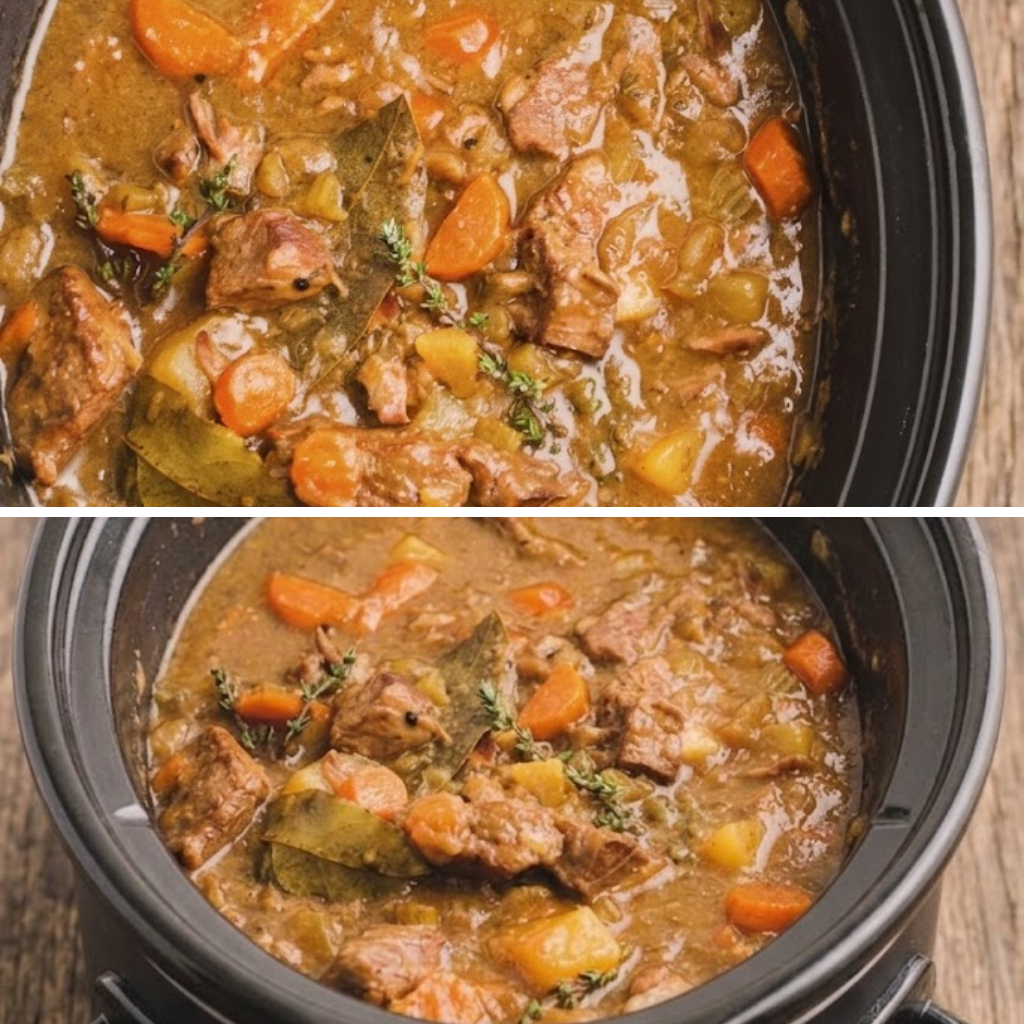
Slow cooker Irish stew with beef and Guinness cooks stew meat, potatoes, carrots, celery, and onion in a full bottle of stout. The beef is coated in seasoned flour, seared in oil, and deglazed with broth and tomato paste before going in. Cook on LOW for 8 hours, no lid opening, serves 8.
The seasoned flour coating does two things: it helps the beef sear properly, and it dissolves into the liquid to give the broth body. Without it, the stew finishes thin even with tomato paste and beef broth. The flour is why the sauce clings to the meat rather than sitting separate in the bowl.
Do not open the lid during the 8-hour cook. Every time the lid comes off, the temperature drops and the slow cooker needs 20 to 30 minutes to recover. Open it twice and you lose a full hour, which is enough time to leave the beef chewy rather than tender.
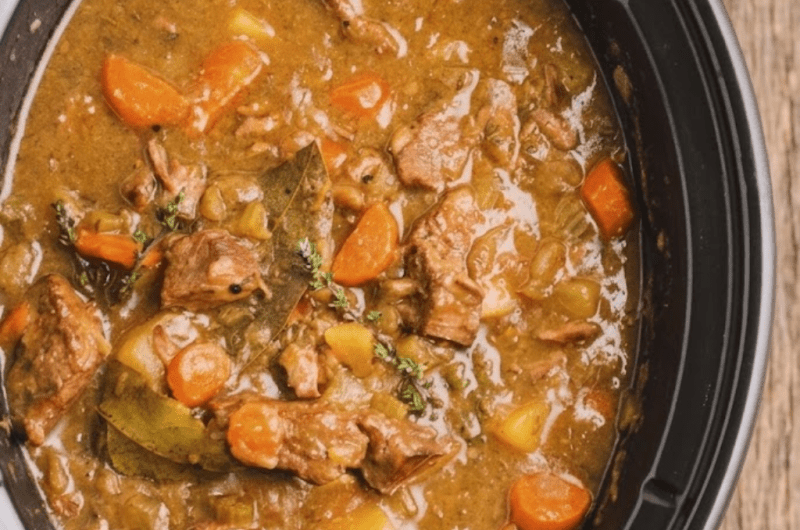
Slow Cooker Irish Stew with Beef and Guinness
Course: DinnerCuisine: Irish-AmericanDifficulty: Easy8
servings30
minutes8
hours149
kcalThirty minutes of stovetop work: coating, searing, deglazing, then the slow cooker takes over for the 8-hour finish. The flour coating includes oregano, thyme, and onion powder, so the seasoning builds into the crust before the liquid even goes in.
Ingredients
- Seasoned flour coating
½ cup all-purpose flour
2 tsp salt
½ tsp pepper
1 tsp dried leaf oregano
1 tsp dried leaf thyme
1 tsp onion powder
- Stew
2 lbs beef stew meat, well trimmed
2 tbsp cooking oil
6 oz tomato paste
15 oz beef broth
3 cups baby red potatoes, quartered
3 cups carrots, sliced
2 cups celery, sliced
1 cup white onion (about 1 small onion), cut into large pieces
2 tsp garlic, minced
11.2 oz Guinness beer (1 bottle — original or extra stout)
2 bay leaves
Directions
- Combine flour, salt, pepper, oregano, thyme, and onion powder in a large zip-lock bag. Add the beef and shake until well coated.
- Heat oil in a large skillet over medium-high heat. Brown the beef on all sides. Add the tomato paste and beef broth, stir until a thick sauce forms, scraping up any stuck-on bits.
- Add the potatoes, carrots, celery, onion, and garlic to the slow cooker. Pour the beef and sauce mixture over the vegetables.
- Stir in the Guinness beer and lay the bay leaves on top.
- Cover and cook on LOW for 8 hours without opening the lid. Remove bay leaves and serve.
FAQs
Can I use lamb instead of beef in this recipe?
Lamb works in this recipe and gives the stew a slightly gamier, richer flavor than beef. Ask the butcher to cube it, or buy a lamb shoulder and cut it yourself into 2-inch pieces. Follow the same steps: coat in flour, sear, deglaze, and cook LOW for 8 hours.
What can I substitute for Guinness if I don’t have it?
Red wine is the closest substitute and gives the stew a similar depth without the stout’s bitterness. Any other dark beer works too, though the flavor will be different from Guinness specifically. If you prefer no alcohol, replace it with additional beef broth plus a splash of Worcestershire sauce for the same savory depth.
Can I cook this on HIGH instead of LOW?
Yes, 5 hours on HIGH works, though the beef’s texture is better when cooked LOW for 8 hours. The collagen in stewing beef needs sustained low heat to convert into gelatin, which thickens the broth and makes the meat pull apart. If you’re short on time, HIGH is a reliable option, but LOW is where the stew reaches its best.
What if I want the same slow cooker braise with a different alcohol base?
Swap the stout for cider and the beef for pork, and you land in a completely different flavor register. A slow cooker pork and cider casserole uses apple cider and whole-grain mustard, giving a lighter, tangier body than this stew. The cook time is the same 6–8 hours on LOW, so the routine does not change at all.
What if I want the same slow-cooked beef stew without the Guinness?
Without the Guinness, slow-cooked beef works just as well in a red wine broth. A slow cooker beef stew uses red wine, diced tomatoes, carrots, potatoes, and fresh thyme, which builds a thick gravy over 7–8 hours on LOW. The searing step and the flour coating are the same, so the technique carries directly over.




Leave a Reply