Diced stewing beef, diced lamb, carrots, parsnips, and potatoes go into the slow cooker with two beef stock cubes dissolved in 750 ml of water. The pot runs on low for 4 to 6 hours and serves six. Both meat and vegetables are browned on the stovetop first before everything goes in.
Half the potatoes go in finely cubed at the start, and the rest go in as chunky pieces halfway through. The finely cubed pieces dissolve over the long cook and thicken the broth from within, with no flour needed. The chunky pieces added later stay intact and give each bowl its body.
Browning the meat and sautéing the veg in the same pan is where the broth depth comes from. The Maillard reaction on the beef and lamb builds flavour compounds that slow cooking can deepen but not create from scratch. Skipping those stovetop steps leaves the broth pale no matter how long the pot runs.
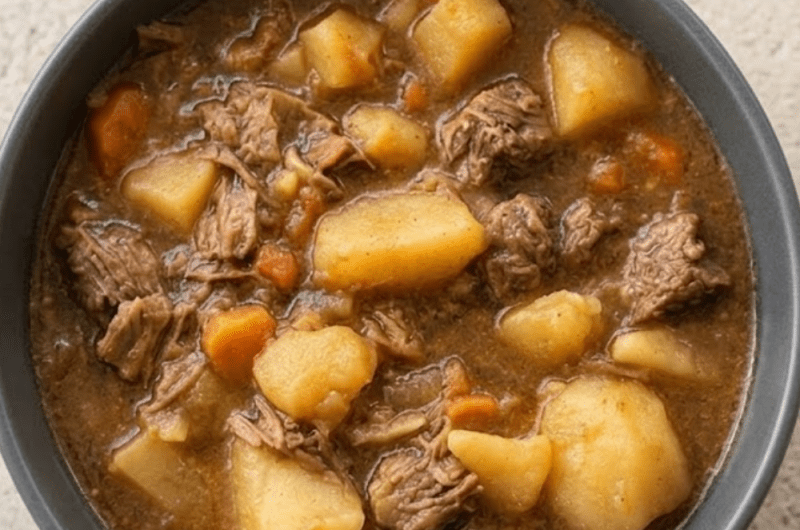
Slow Cooker Pat’s Scouse
Course: DinnerCuisine: BritishDifficulty: Easy6
servings30
minutes6
hours420
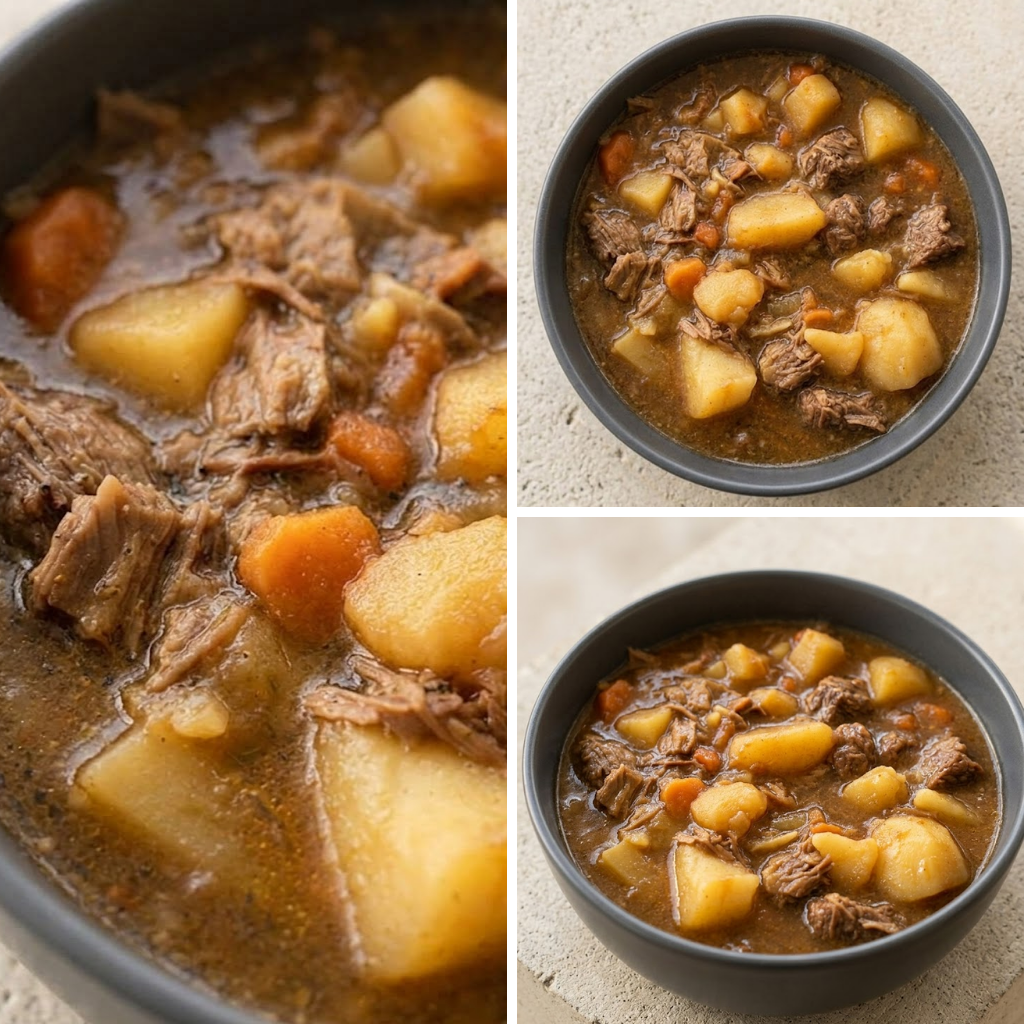
kcalSlow Cooker Pat’s Scouse Recipe with diced stewing beef, diced lamb, carrots, parsnips, and potatoes in beef stock. Serves six in 4 to 6 hours on low
Ingredients
- Stew
1 tablespoon olive oil
1 onion, chopped
400 grams diced stewing beef
300 grams diced lamb
Freshly ground black pepper, to taste
2 dashes Worcestershire sauce (plus more to finish)
2 carrots, diced
2 parsnips, chopped
900 grams potatoes (half finely cubed, half roughly chopped)
2 beef stock cubes
750 ml water
- To serve
Pickled red cabbage or pickled beetroot
Directions
- Soften the onion in a tablespoon of olive oil in a large pan. Transfer to the slow cooker.
- Brown the beef and lamb in the same pan in batches. Season with black pepper and one dash of Worcestershire sauce. Cook until sealed, then transfer to the slow cooker.
- Sauté the carrots and parsnips in the fat remaining in the pan. Transfer to the slow cooker.
- Add the finely cubed potatoes to the slow cooker. Crumble in the stock cubes and pour over the water, adding just enough to nearly cover the potatoes. Cover and cook on low for 2 to 3 hours.
- Add the roughly chopped potatoes. Cook on low for a further 2 to 3 hours, until the meat is tender and the broth has thickened. Taste and adjust seasoning with pepper and a further dash of Worcestershire sauce. Serve with pickled red cabbage or beetroot alongside.
FAQs
Where does scouse get its name?
Scouse takes its name from lobscouse, a sailor’s stew that arrived in Liverpool through the port trade. Lapskaus in Norwegian, lobscouse in Dutch and German, the dish moved along northern European trade routes before putting down roots in Liverpool. Over generations it became so closely tied to the city that Liverpudlians are nicknamed Scousers.
Can I add extra vegetables like turnip or swede?
Turnip, swede, or celery all work well alongside the carrots and parsnips. Scouse was historically a working-class dish made from whatever was to hand, so it is naturally forgiving about extra root vegetables. Add any extra veg at the same time as the first batch of potatoes so they have the full cook to soften.
Why does Worcestershire sauce go in twice?
The first dash goes in with the meat as it seals, and the second is added as a final seasoning check. The dose during browning cooks into the meat and becomes part of the broth’s base note over 4 to 6 hours. The finishing dash is added raw so its sharpness registers in the final bowl.
What other slow cooker beef stew fits alongside this in a weekly rotation?
A simpler beef base without lamb or parsnip covers the same slot on a different night. A 5-ingredient slow cooker beef stew on this site builds from beef and a handful of staples with no stovetop browning required. Together the two cover different ends of the beef stew range from the same appliance.
What slow cooker recipe makes lamb the only meat for a different format?
When lamb alone carries the whole bowl, shanks offer a completely different format. A slow cooker lamb shanks recipe on this site uses only 4 ingredients and lets one cut do all the work. Together the two sit at opposite ends of the lamb range, one melting into a thick pot, the other plated whole.


Leave a Reply